
Energy Transformation
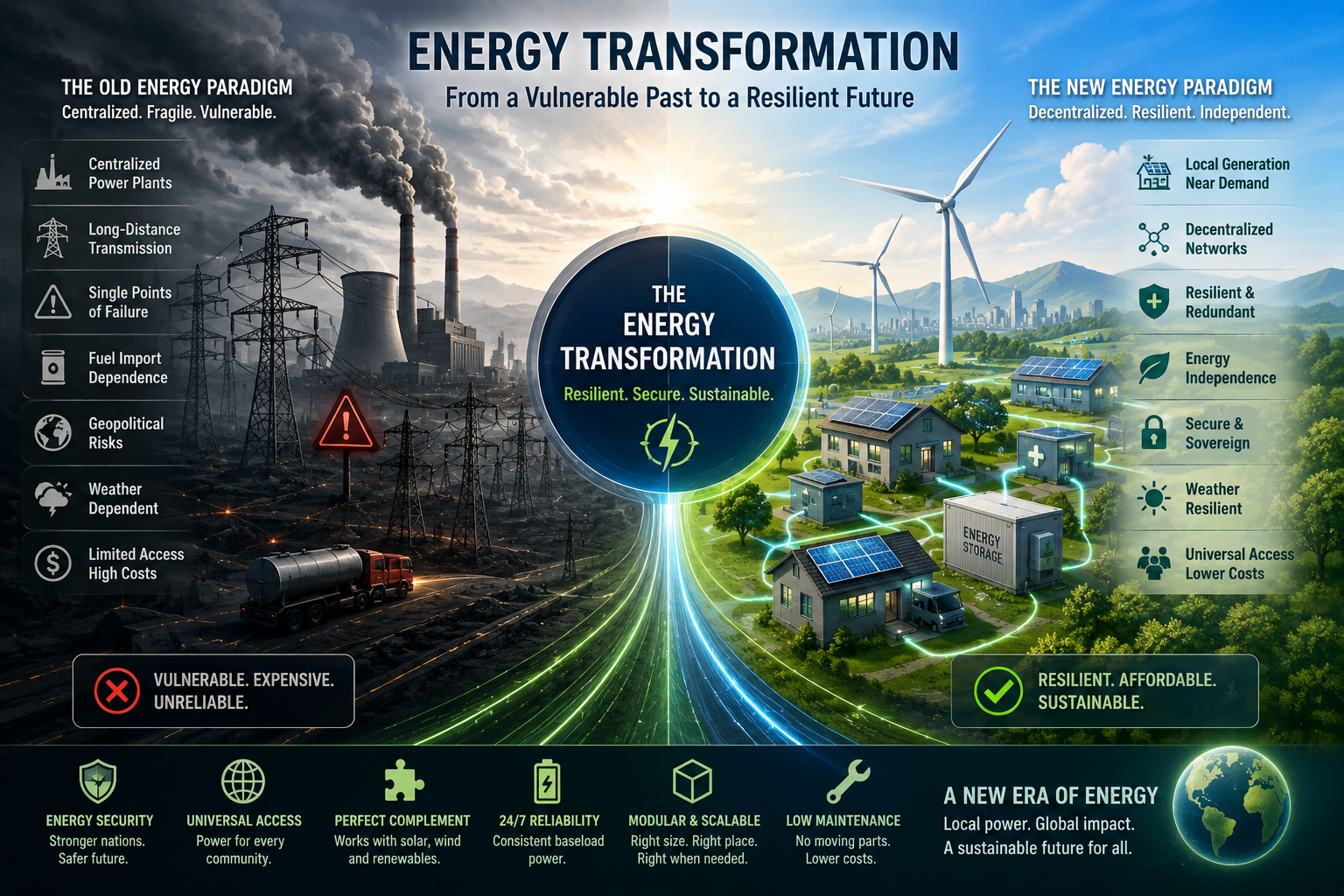
Rethinking the Traditional Energy Model
The modern electricity system was built around centralized power generation and extensive transmission networks designed to deliver energy over long distances. While this model has supported economic growth for decades, its limitations are becoming increasingly evident. A single failure—whether a damaged transmission line, a critical infrastructure outage, or a disruption in fuel supply—can trigger widespread instability and large-scale blackouts.
As energy demands continue to grow, a new approach is emerging: localized, resilient, and self-sufficient energy networks. Rather than relying on a monolithic grid where power is generated far from the point of consumption, this model embraces a distributed architecture of independent generation nodes. By producing electricity where it is needed, communities can significantly reduce systemic risks and establish a more secure foundation for economic activity, national security, and everyday life.
Eliminating Dependence on Vulnerable Transmission Networks
One of the greatest weaknesses of the traditional grid is its dependence on vast networks of transmission lines and long-distance energy supply routes. These extensive infrastructures are costly to maintain and create critical points of failure that can affect entire regions. A decentralized energy framework addresses this challenge by reducing reliance on long-haul transmission systems. Localized generation enables communities to maintain access to electricity regardless of disruptions occurring elsewhere in the network. This approach not only enhances reliability but also removes a fundamental vulnerability from the energy supply chain, fostering greater energy autonomy and resilience.
Delivering Reliable Power Beyond Weather Conditions
Many renewable energy sources, including solar and wind, play an essential role in the transition to cleaner energy. However, their performance is inherently dependent on environmental conditions. Solar generation varies with sunlight availability, cloud cover, and atmospheric conditions, while wind energy depends on fluctuating weather patterns.
For energy systems to achieve true reliability, a consistent and predictable source of baseload power is required. An ideal energy solution operates independently of sunlight, wind, water availability, or air quality, ensuring uninterrupted power generation around the clock. Such reliability reduces dependence on costly backup systems and guarantees continuous electricity supply regardless of weather conditions or time of day.
Strengthening National Energy Security
Energy security is closely tied to geopolitical stability. Nations that depend heavily on imported fuels or vulnerable transmission corridors expose their critical infrastructure to supply disruptions, political pressures, and the consequences of international conflicts.
A decentralized energy ecosystem enhances national resilience by reducing dependence on external energy sources and minimizing exposure to geopolitical risks. Localized power generation strengthens economic stability, protects critical infrastructure, and makes energy systems less vulnerable to physical attacks or external disruptions. By removing these strategic vulnerabilities, countries can achieve greater energy sovereignty and long-term security.
Expanding Energy Access Without Geographic Limitations
Traditional renewable technologies are often influenced by geographic and climatic factors. Wind energy requires favorable wind conditions, while solar generation depends on adequate sunlight exposure. As a result, energy accessibility can vary significantly between regions.
A truly universal energy solution should operate efficiently regardless of latitude, terrain, climate, or ambient temperature. Such a technology would enable reliable electricity access for remote villages, island communities, and underserved regions where extending conventional grid infrastructure is economically impractical. By overcoming geographical barriers, decentralized energy systems can democratize access to electricity and support sustainable development worldwide.
The Importance of Modularity and Scalability
Modern energy infrastructure must be adaptable to diverse applications and varying energy demands. A modular and scalable energy solution allows capacity to be deployed precisely where it is needed—from individual homes and commercial facilities to industrial microgrids and entire communities.
This flexibility eliminates the inefficiencies associated with overbuilding centralized infrastructure and enables incremental expansion as demand grows. Such an approach reduces capital expenditures while ensuring that energy systems remain responsive to evolving requirements.
Complementing Renewable Energy for a Complete Clean Energy Future
The transition to a sustainable energy future does not require competition between technologies—it requires integration. A dependable baseload energy source can complement solar and wind generation by filling the gaps created by intermittency.
By working alongside existing renewable resources, decentralized energy systems can provide continuous, 24/7 electricity while maximizing the effectiveness of clean energy investments. The result is a resilient, balanced, and sustainable power ecosystem where energy becomes a dependable resource rather than a vulnerable commodity.
Conclusion
The future of energy lies in resilience, decentralization, and self-sufficiency. By reducing dependence on vulnerable transmission networks, overcoming geographic and climatic limitations, strengthening national security, and complementing renewable energy sources, distributed power generation offers a pathway toward a more reliable and sustainable energy future.
As the world confronts growing energy challenges, the shift toward localized and scalable energy systems represents not only a technological evolution but also a strategic transformation—one that can deliver secure, continuous, and universally accessible power for generations to come.